
24/7 GTA response
Mold Remediation in Toronto and the GTA
Containment, HEPA filtration, safe removal, source correction, and post-remediation cleaning for visible mold and hidden moisture problems.
When to call
Signs you need mold help now.
Process
How we handle the job.
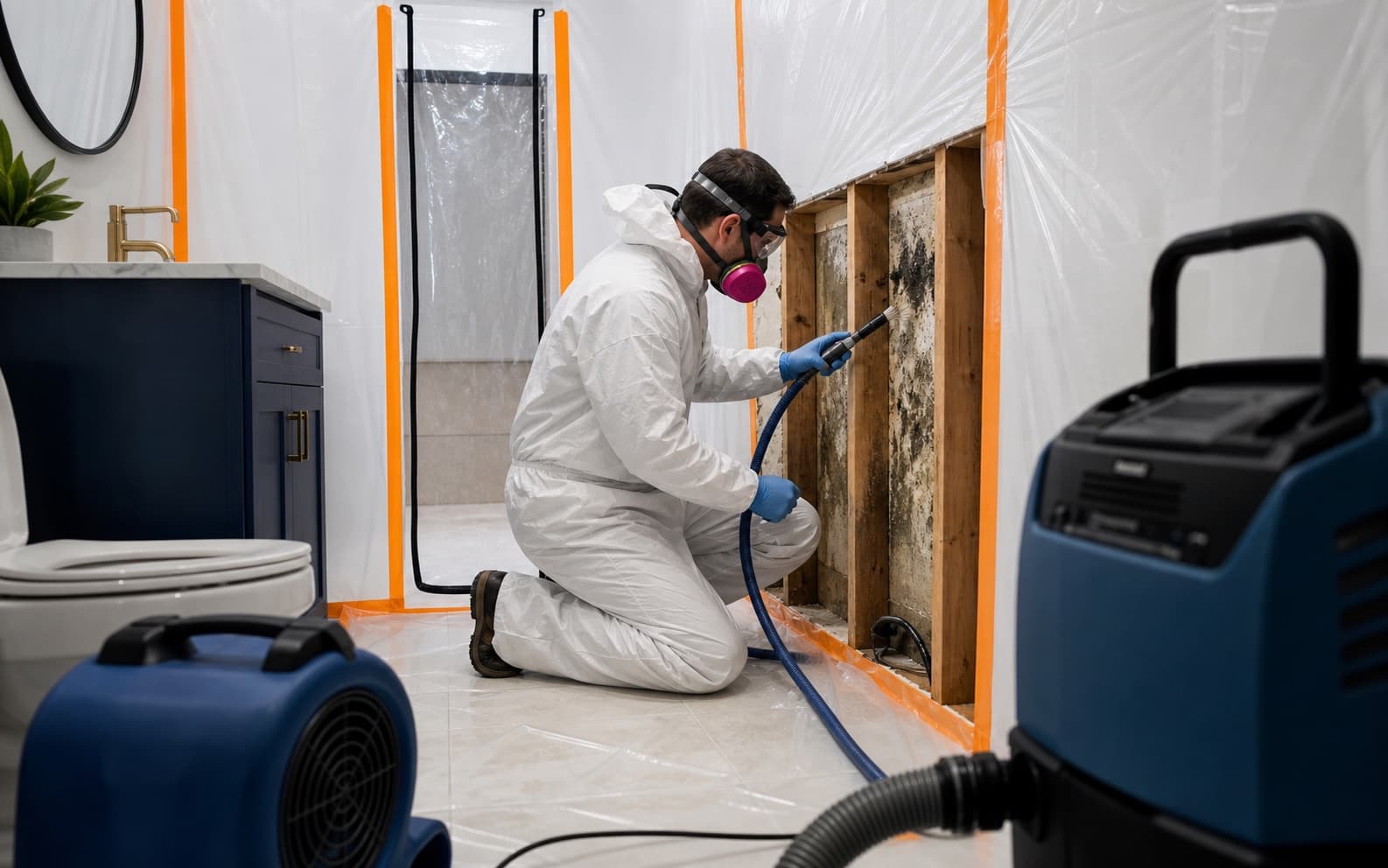
Mold remediation needs containment and discipline. We isolate the affected area, remove impacted materials, and correct the moisture source.
- 01Moisture source investigation
- 02Containment and negative air setup
- 03HEPA air filtration
- 04Removal of impacted porous materials
- 05Surface cleaning and antimicrobial treatment
- 06Final cleaning and prevention recommendations
Before help arrives
Immediate steps for mold.
- 1Stop the moisture source if it can be done safely; remediation will not hold if the leak or humidity problem continues.
- 2Avoid disturbing visible growth, removing drywall, sanding, or directing a household fan at the area.
- 3Keep children, pets, and people with respiratory sensitivity away from the affected space.
- 4Do not cover growth with paint or rely on surface spraying when porous materials or concealed cavities are affected.
- 5Document the location, moisture history, odours, and any previous water event before arranging an assessment.
Common causes we assess
- Unresolved leaks and wet drywall
- Attic condensation or roof leakage
- Basement humidity and seepage
- Bathroom ventilation problems
- Water damage that was not fully dried
What affects the estimate
- Size and location of the affected area
- Concealed growth and access to wall, ceiling, or attic cavities
- Containment and air-filtration requirements
- Material removal, cleaning, and disposal
- Moisture correction and reconstruction
Professional scope
What the restoration plan can include.
Moisture-source investigation and a work plan based on the visible extent, materials, occupancy, and risk of spread.
Containment and air control where needed before controlled removal of affected porous materials.
HEPA vacuuming and detailed cleaning of retained surfaces, followed by waste handling and cleaning of the work area.
Drying and source-correction recommendations, with post-remediation verification discussed when appropriate to the project.
Property-specific response
Planning mold for homes, condos, and businesses.
Houses and finished basements
The plan accounts for occupants, pets, stored contents, finished flooring, wall and ceiling cavities, insulation, cabinetry, utilities, and safe movement through the home. Source control and protection of unaffected rooms come first.
Condo and multi-unit properties
Condo restoration may require management approval, shut-off coordination, elevator or loading access, parking arrangements, work-hour rules, and documentation of water, smoke, or odour movement between neighbouring units.
Rental and managed properties
Landlords and property managers need a clear contact chain, tenant access, emergency authorization, affected-unit records, photos, daily updates, and a separation between immediate mitigation and the later repair scope.
Commercial restoration
Business losses add staff and public safety, operating hours, inventory, equipment, loading access, containment, noise, odour, and continuity requirements. Work can be phased so safe areas remain usable when conditions allow.
How long can it take?
A small, accessible remediation area may take a few working days. Larger containment zones, concealed growth, occupied buildings, drying, or reconstruction take longer. The source must be corrected and retained materials must be dry before the space is closed back up.
Insurance documentation
Mold coverage varies widely and may depend on whether it resulted from a sudden covered water loss. Keep records of the original leak, discovery date, photos, moisture findings, prior repairs, and the remediation scope. Ask the insurer directly about coverage before assuming it applies.
Why homeowners choose Restoration GTA
24/7 dispatch
Need mold service today?
Dispatch is available 24/7 across Toronto and the GTA. Call now or request a free assessment.