
24/7 GTA response
Water Damage Restoration in Toronto and the GTA
Rapid water extraction, structural drying, moisture mapping, antimicrobial treatment, and rebuild support for burst pipes, floods, leaks, and sewer backups.
When to call
Signs you need water damage help now.
Toronto emergency guide
Basement flooded right now?
Use the Toronto flooded-basement guide for electrical and sewage precautions, 311 reporting, extraction and drying steps, insurance documentation, and the current City flood-protection subsidy.
Open the flooded basement cleanup guideProcess
How we handle the job.
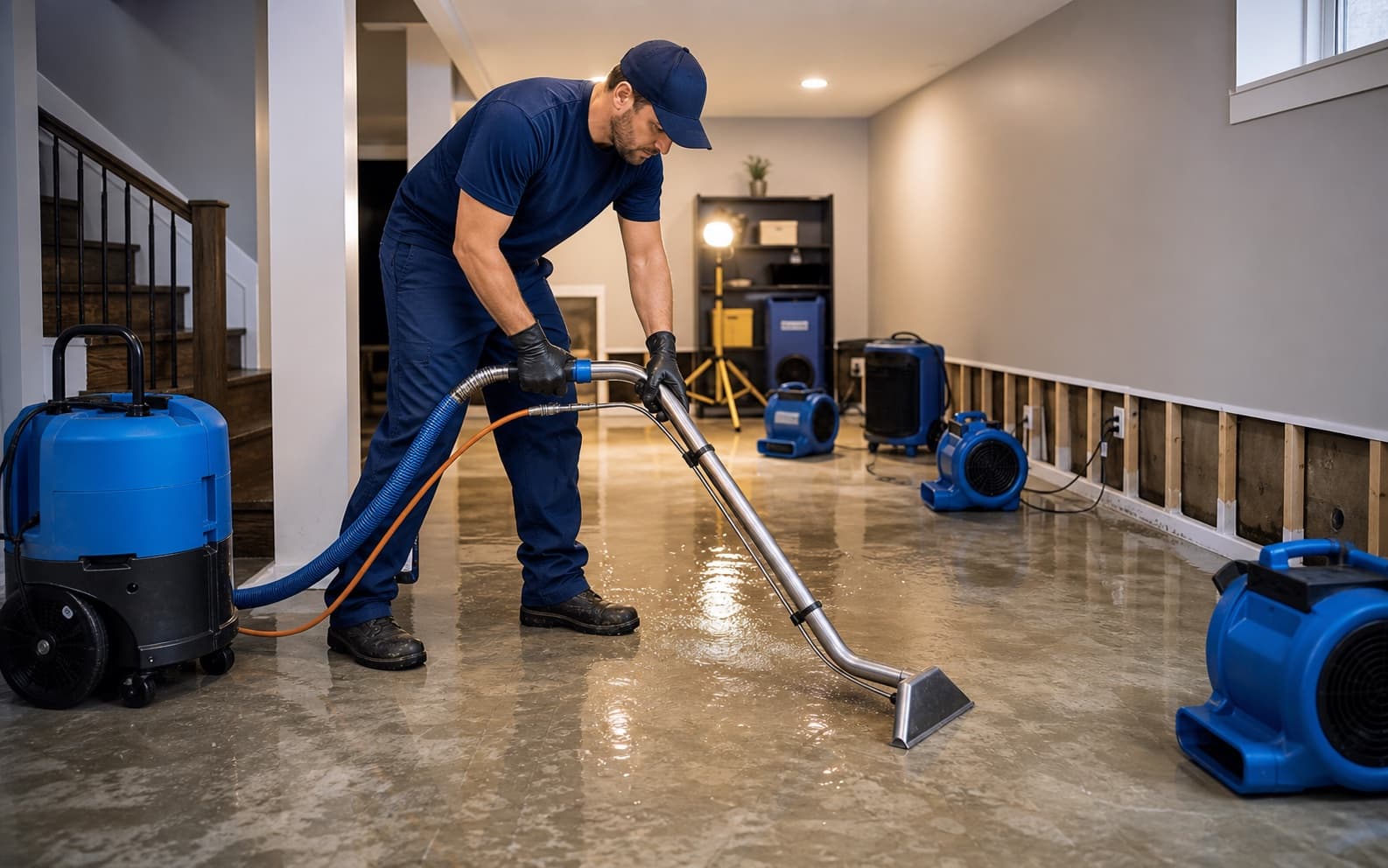
Stop water before it spreads into framing, flooring, insulation, and mold growth. We extract, dry, document, and restore.
- 01Emergency inspection and moisture mapping
- 02Water extraction with commercial equipment
- 03Targeted drying with air movers and dehumidifiers
- 04Daily moisture monitoring and documentation
- 05Antimicrobial treatment where needed
- 06Repair scope and rebuild coordination
Before help arrives
Immediate steps for water damage.
- 1Shut off the water source only when it is safe and you know which valve controls it.
- 2Keep people away from standing water near electrical panels, outlets, appliances, or a sagging ceiling.
- 3Move small dry contents away from the wet area, but do not enter contaminated water or disturb damaged building materials.
- 4Photograph the source and visible damage before cleanup when doing so will not delay an emergency response.
- 5Call promptly because water can travel under flooring, behind baseboards, through wall cavities, and into rooms below.
Common causes we assess
- Burst or frozen pipes
- Failed supply lines and appliances
- Sump-pump or drain failures
- Roof and window leaks
- Condo leaks from an adjacent unit
What affects the estimate
- Water category and contamination
- Square footage and number of affected levels
- Flooring, drywall, insulation, cabinetry, and contents
- Time between the loss and extraction
- Access, demolition, drying equipment, and repair needs
Professional scope
What the restoration plan can include.
Source and safety assessment, moisture mapping, and classification of the affected water and materials.
Extraction of standing water followed by targeted removal of materials that cannot be safely dried or cleaned.
Air movement and dehumidification planned around the building assembly, with moisture checks used to track progress.
Cleaning, odour control, contents protection, photo documentation, and a repair scope for the damaged finishes.
Property-specific response
Planning water damage for homes, condos, and businesses.
Houses and finished basements
The plan accounts for occupants, pets, stored contents, finished flooring, wall and ceiling cavities, insulation, cabinetry, utilities, and safe movement through the home. Source control and protection of unaffected rooms come first.
Condo and multi-unit properties
Condo restoration may require management approval, shut-off coordination, elevator or loading access, parking arrangements, work-hour rules, and documentation of water, smoke, or odour movement between neighbouring units.
Rental and managed properties
Landlords and property managers need a clear contact chain, tenant access, emergency authorization, affected-unit records, photos, daily updates, and a separation between immediate mitigation and the later repair scope.
Commercial restoration
Business losses add staff and public safety, operating hours, inventory, equipment, loading access, containment, noise, odour, and continuity requirements. Work can be phased so safe areas remain usable when conditions allow.
How long can it take?
A small clean-water loss may require several days of drying after extraction. Larger losses, water trapped in assemblies, contaminated water, or damaged finishes can extend mitigation and repair. Drying should be based on material readings and site conditions, not a fixed number of equipment days.
Insurance documentation
Keep the source invoice, photos, emergency invoices, moisture documentation, damaged-item records, and communication with the insurer. Coverage and deductibles depend on the policy and cause of loss; a restoration contractor documents the work but does not decide coverage.
Why homeowners choose Restoration GTA
Priority service areas
Find water damage help in your city.
24/7 dispatch
Need water damage service today?
Dispatch is available 24/7 across Toronto and the GTA. Call now or request a free assessment.